Every system we ship is fully integrated with ATAK.
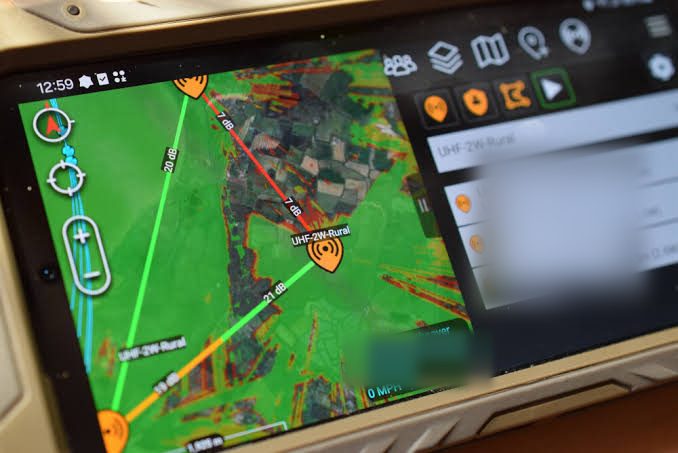
Not "compatible with". Integrated — plugin installed, channels mapped, area-of-operation tiles loaded, and tested against your own kit before it leaves us. Every node on the mesh appears on the common operating picture with no uplink, no SIM and no cloud.
What the integration actually gives you.
A radio that only carries text is a novelty. The value is a shared picture that everyone in the team is looking at — updating itself, over ground that has no infrastructure at all.
Blue-Force Tracking
Every node's position on one map, refreshed on a configurable interval. Section commander, platoon HQ and — if bridged — battalion all see the same picture.
Chat by Callsign
Free-text between individuals, sections or the whole channel. Silent, low-signature and legible — no voice discipline problem, no repeat-say-again.
Casualty & MEDEVAC
Drop a casualty marker or a 9-line and it reaches everyone on the channel with a grid attached — no dictation, no transcription error.
Offline Maps
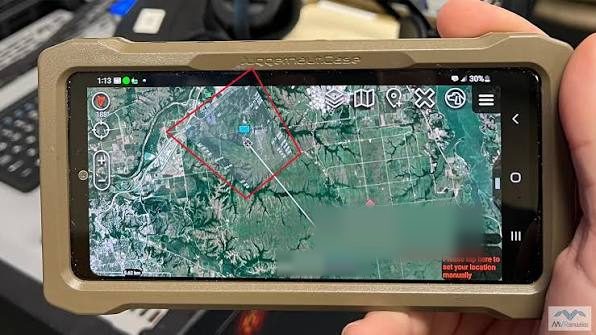
Area-of-operation tiles pre-loaded before dispatch. The map works with no data connection at all — because there will not be one.
Link Health Visible
Signal margin and hop count shown per link, so an operator can see the mesh degrading and move — rather than discovering it when a message fails.
CoT Bridge
Optional Cursor-on-Target bridge pushes the field picture to higher echelons where a backhaul exists, with channel-level filtering on what leaves the mesh.
Mesh View
 Markers
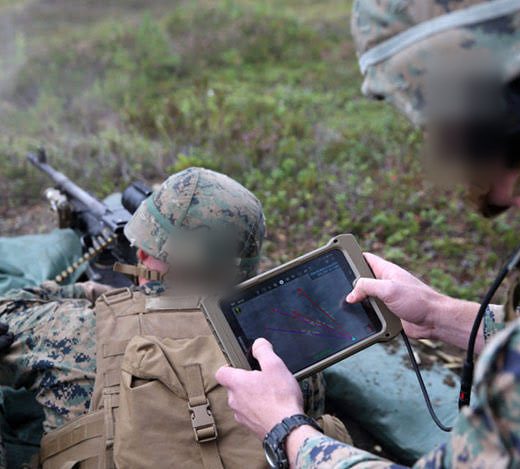 Tablet
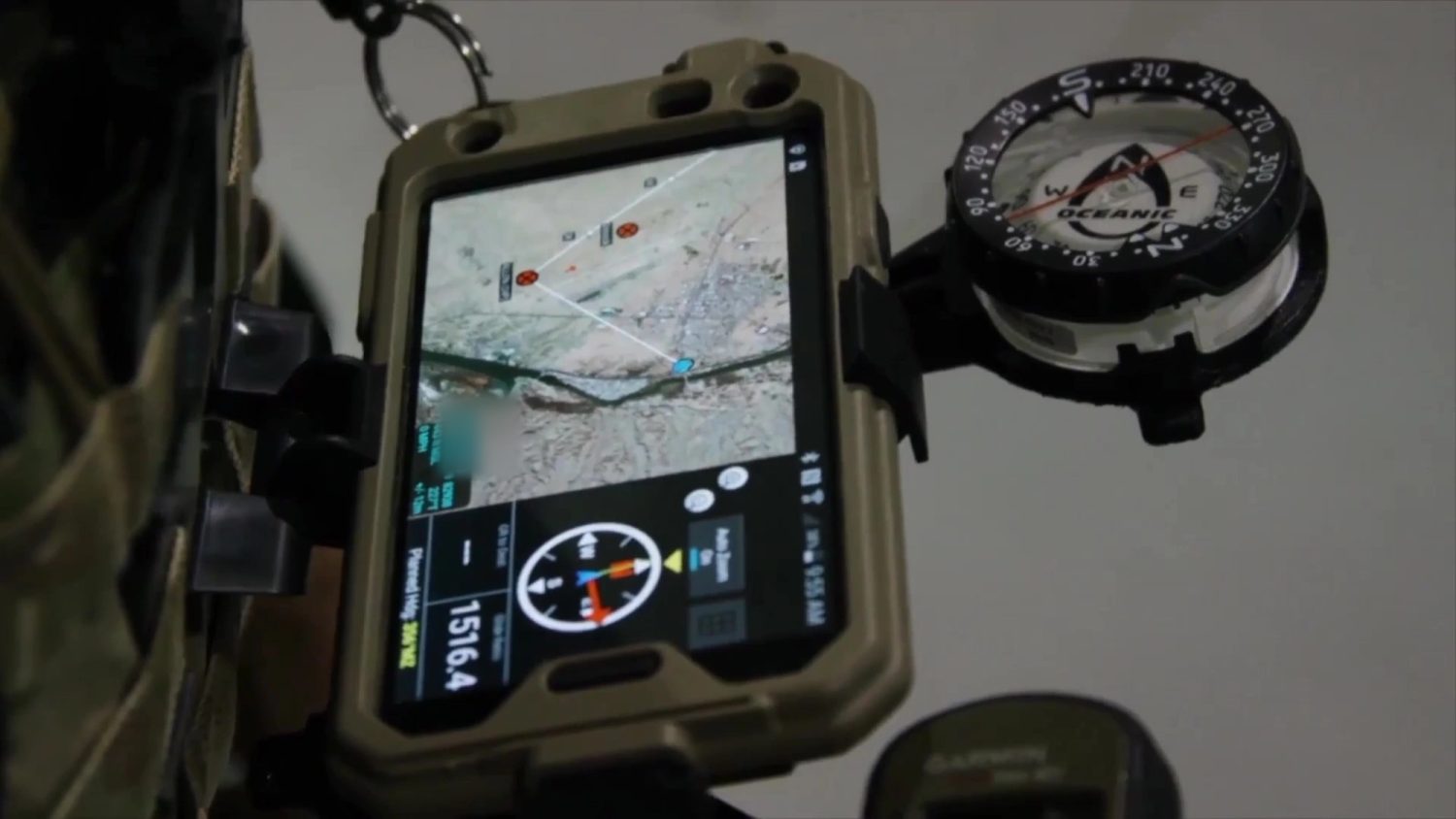
Worn
Tablet
Worn
ATAK, on a handset with nothing phoning home.
A tactical map application is only as trustworthy as the operating system under it. On a stock retail handset, position history, contacts and telemetry leave the device continuously — to services outside your control and, usually, outside the country.
So we do not ship stock handsets. Every ATAK end-user device we supply has the factory Android build and all Google services removed, and a hardened, de-Googled OS installed in their place. No account sign-in, no Play Services, no background telemetry, no vendor analytics. The device does its job and reports to nobody.
- Factory Android build and Google services removed entirely
- Hardened de-Googled OS — no accounts, no Play Services, no telemetry
- ATAK / iTAK pre-installed with the Meshtastic plugin configured
- Area-of-operation map tiles loaded offline before dispatch
- Channel keys provisioned to your mesh, not to a cloud
- Network radios disabled or removed to policy on request
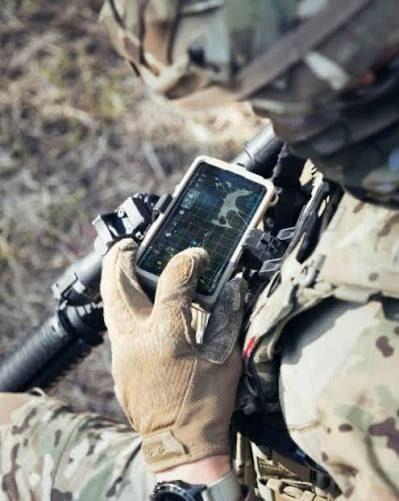
- Rugged case, glove-operable, chest or rail mountable
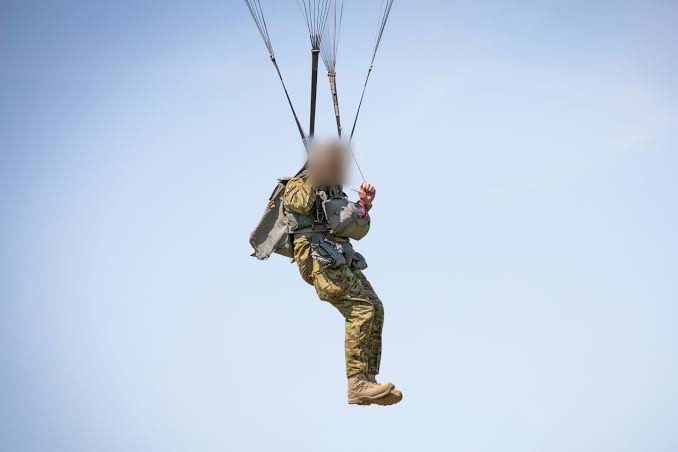
From exit to rally, on one channel.
A parachute descent is the hardest few minutes a small unit has: the stick is dispersed by wind and exit interval, nobody can see anybody, and voice is the last thing anyone has a free hand for.
Carrier-mounted nodes stay on through the jump. As the stick clears the aircraft the mesh re-forms on its own, and every jumper's position appears on the lead's EUD before the canopies are fully open. Rally is a point on a map instead of a shouted grid — and drift, which is what actually separates a stick, becomes visible rather than guessed at.
- Nodes stay powered and sealed through exit, opening and landing
- Mesh self-forms in the drop zone with no operator action
- Rally point pushed as a marker every jumper can navigate to
- Dispersed jumpers located without a single voice transmission
- Low-profile mounting that clears the harness and reserve
Three-day ATAK & mesh operator course.
Kit that nobody has been taught to use gets left in the store. This is a hands-on course that takes four people from unboxing to running a mesh on their own ground, with ATAK on the map and a fault they have fixed themselves.
Day 1 — Mesh Fundamentals
How LoRa mesh actually behaves, and what it will not do. Device familiarisation, antennas and power. Region, channel and AES key setup. Building a mesh from scratch, adding and dropping nodes, and reading link quality in real terrain.
Day 2 — ATAK Integration
ATAK and iTAK setup, plugin pairing over Bluetooth, and getting every node onto the map. Position reporting intervals, chat by callsign, casualty and 9-line markers, shared waypoints, offline map tiles for your own area, and an introduction to CoT bridging.
Day 3 — Field Exercise & Sustainment
Deployment planning: node siting, elevation and where a repeater earns its place. A full exercise on your ground. Then fault-finding — no link, no GPS, no pairing, flat battery — plus key rotation policy, charging discipline and storage.
Anywhere in India
We come to you. Our team, our equipment, trained on the ground your teams actually work on.
- Travel to any site in India included
- All training equipment provided by us
- Three full days, hands-on throughout
- Exercise run on your own terrain
Greater Noida
The same three-day course run at our workshop, where the whole product range is on the bench.
- All training equipment provided
- Trainee travel and stay not included
- Full product range available to handle
Terms: 50% advance to confirm the booking, balance before the course commences. Prices are per batch of four trainees, GST extra. Government and defence orders welcome against indent or purchase order. Larger batches and multi-batch programmes quoted on request.
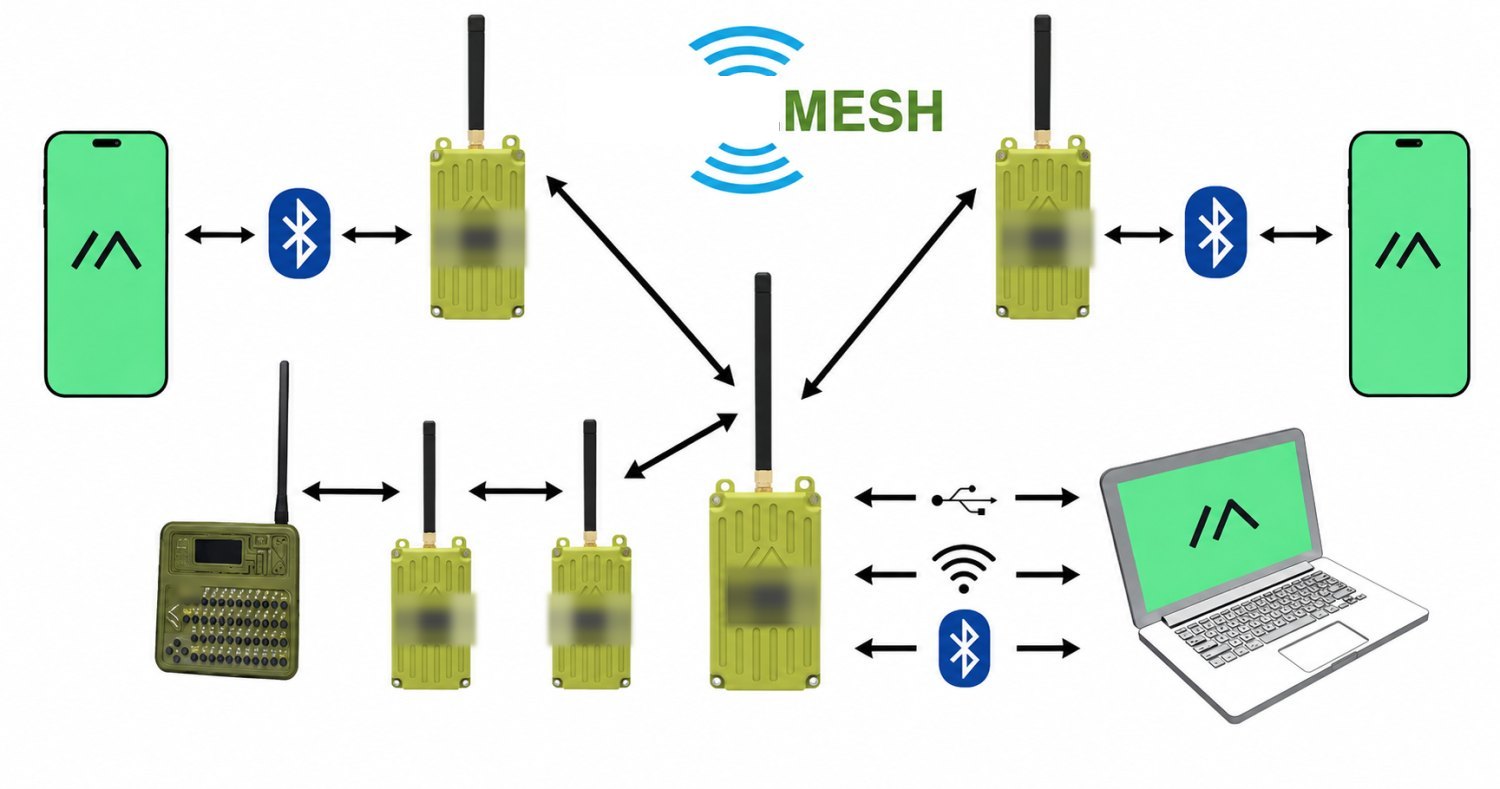
How the pieces connect.
Nodes talk to each other over encrypted LoRa and relay for one another automatically. Each node connects to its operator's device over Bluetooth, USB or Wi-Fi — phone, tablet, rugged EUD or laptop, whichever the role calls for.