One tracker. Twelve ways to mount it.
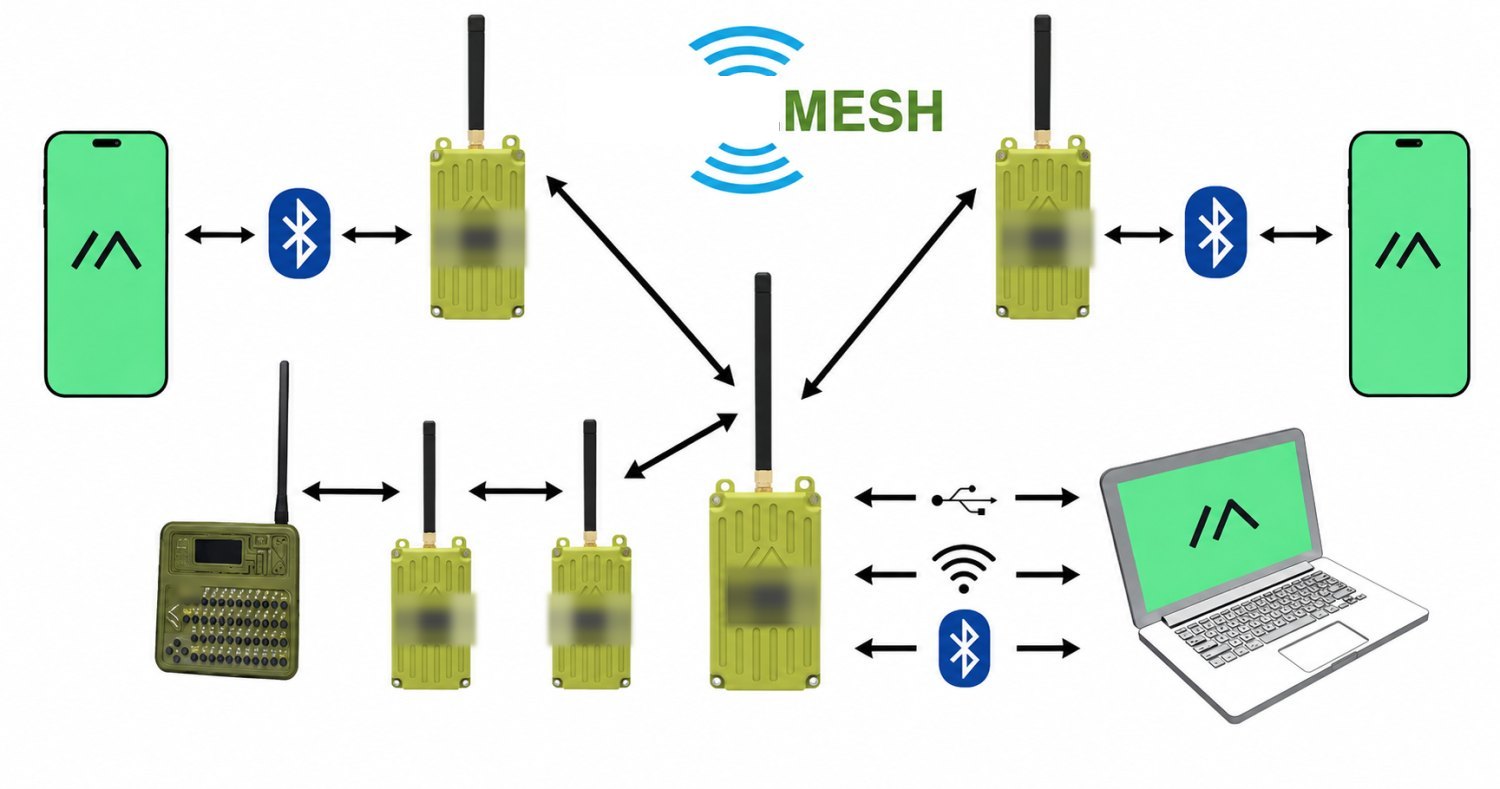
Our trackers use the standard GoPro two-prong interface, so the same device goes on a helmet, a weapon rail, a chest harness, a handlebar, a bulkhead or an aircraft skin without a single proprietary bracket. Position and messages flow straight into ATAK.
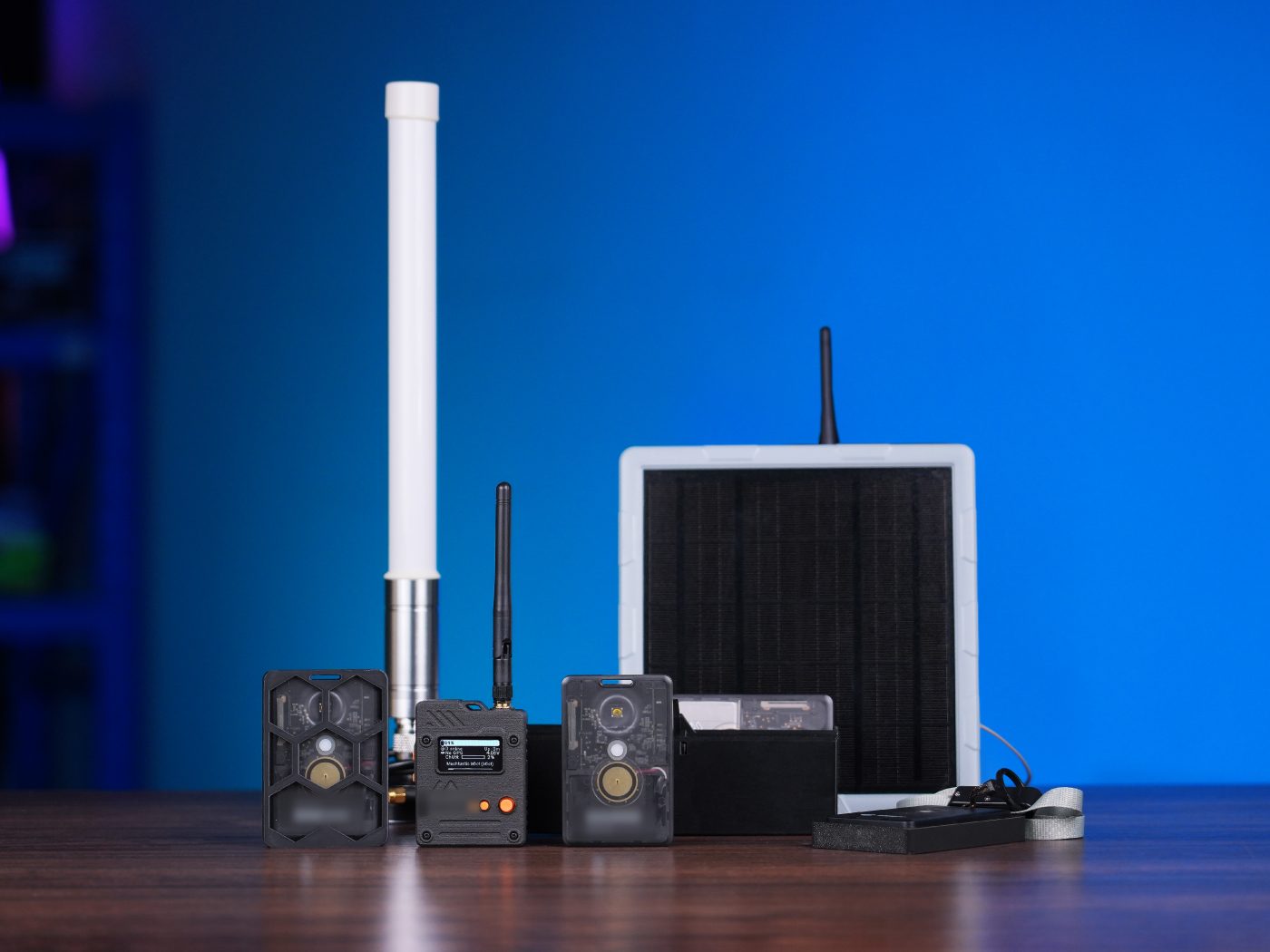
Six form factors, one mesh.
Every device below speaks the same encrypted LoRa mesh and appears on the same map. Mix them freely — a section can carry helmet trackers while the vehicle runs a rugged node and the OP watches a command display, all on one channel.
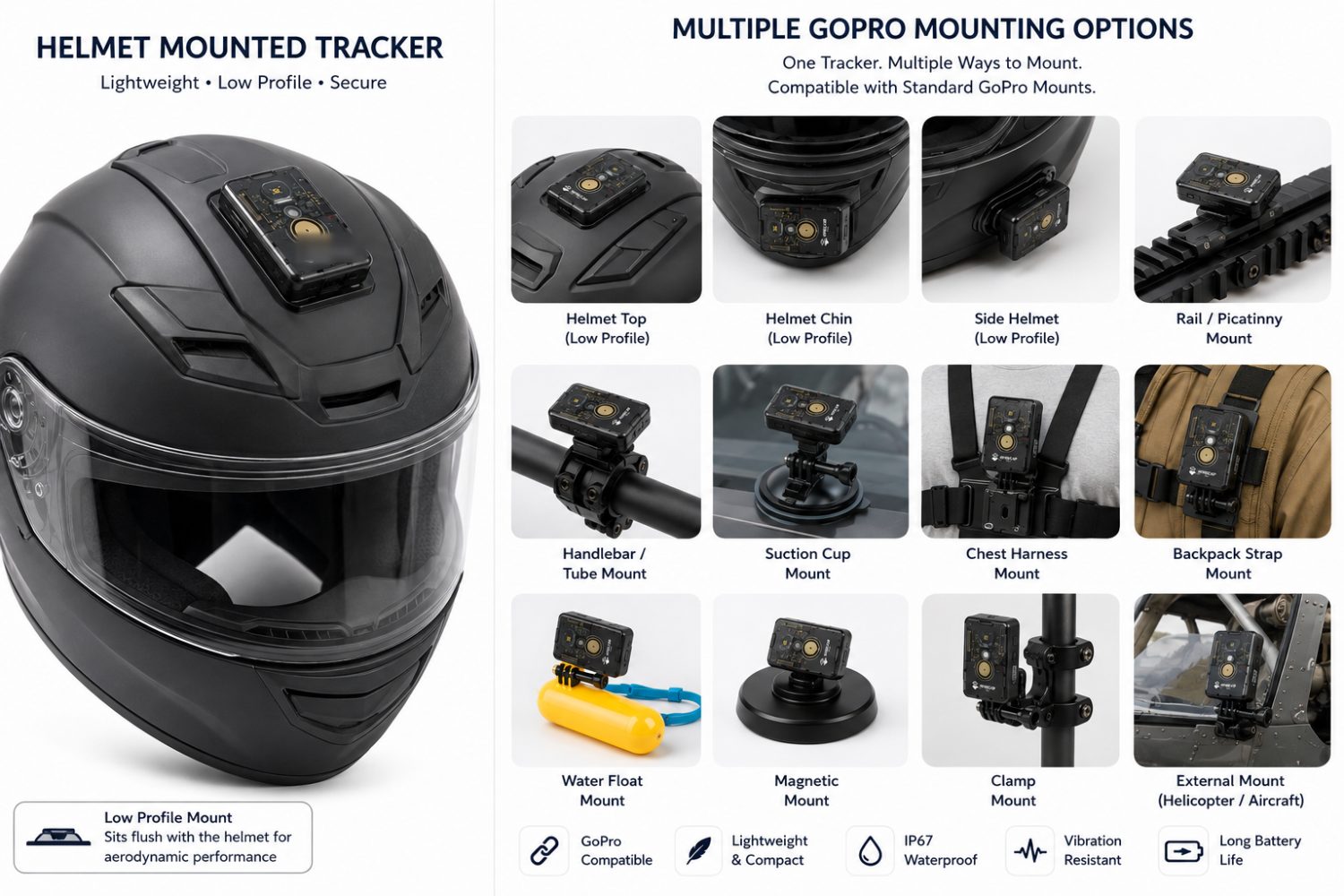
Helmet / GoPro Tracker
Low-profile tracker that sits flush with the helmet shell for aerodynamic performance. Standard GoPro prong interface — helmet top, chin or side, all without a bespoke bracket.
- Lightweight, low-profile, vibration resistant
- IP67 sealed against rain, dust and immersion
- Fits any standard GoPro-compatible adhesive or strap mount
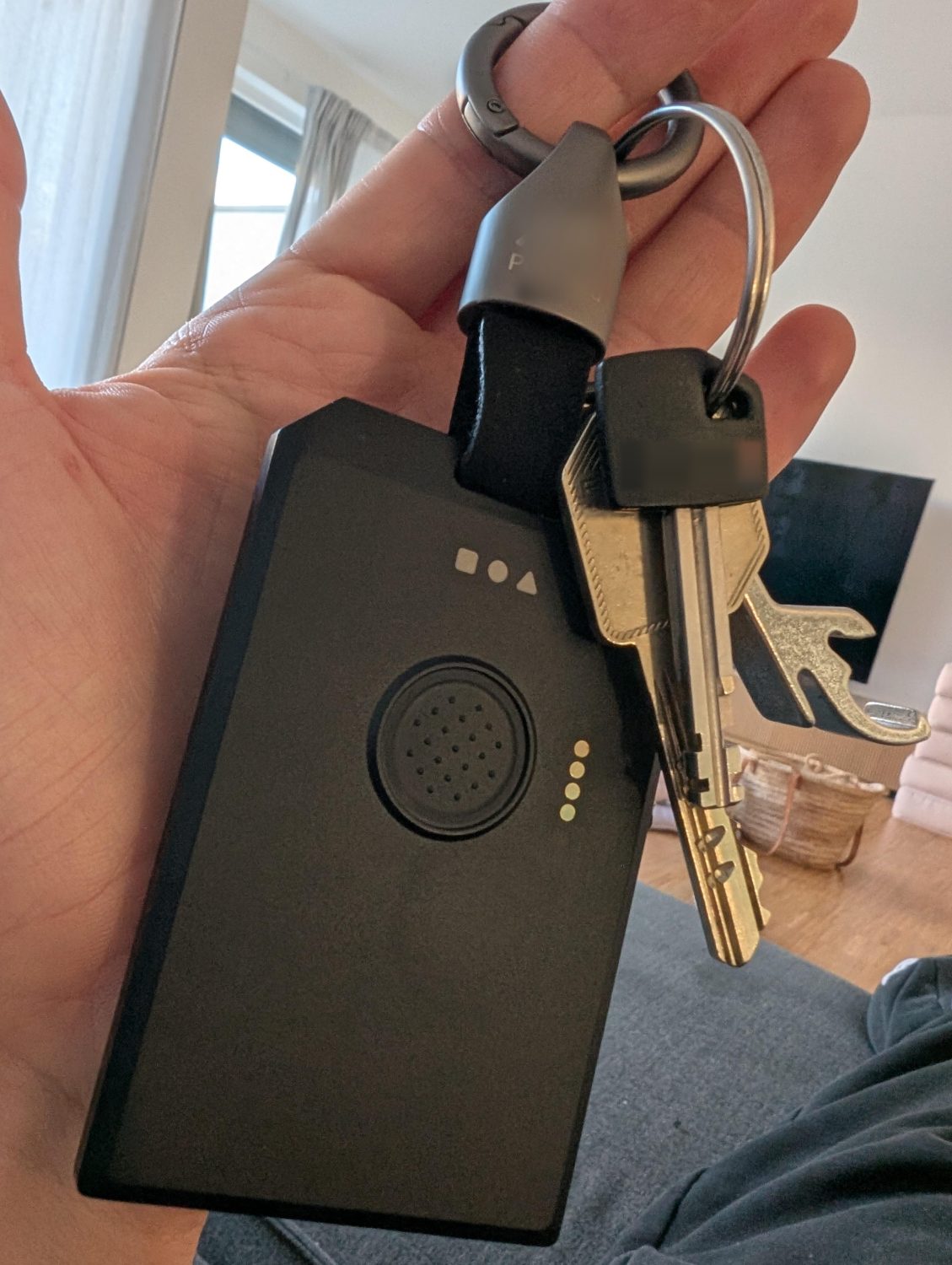
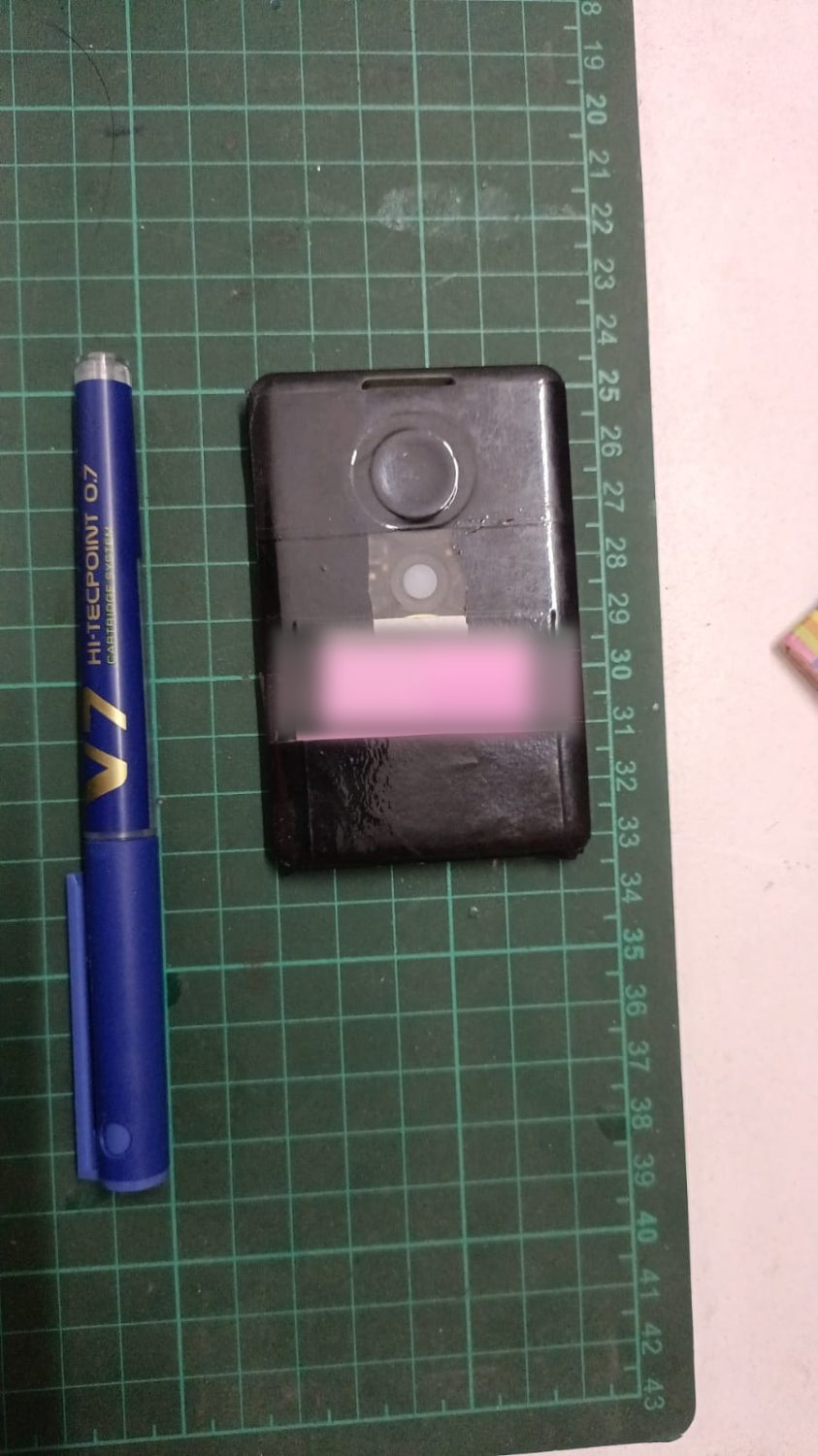
Keychain Tracker
The smallest node in the range — a pocket or keyring tracker with a single action button and battery-state LEDs. For staff, drivers, trekkers and anyone who will not wear a harness.
- Single-press check-in and hold-to-alert
- Four-segment battery indicator, days of standby
- Pairs to a phone over Bluetooth, or runs silent and standalone
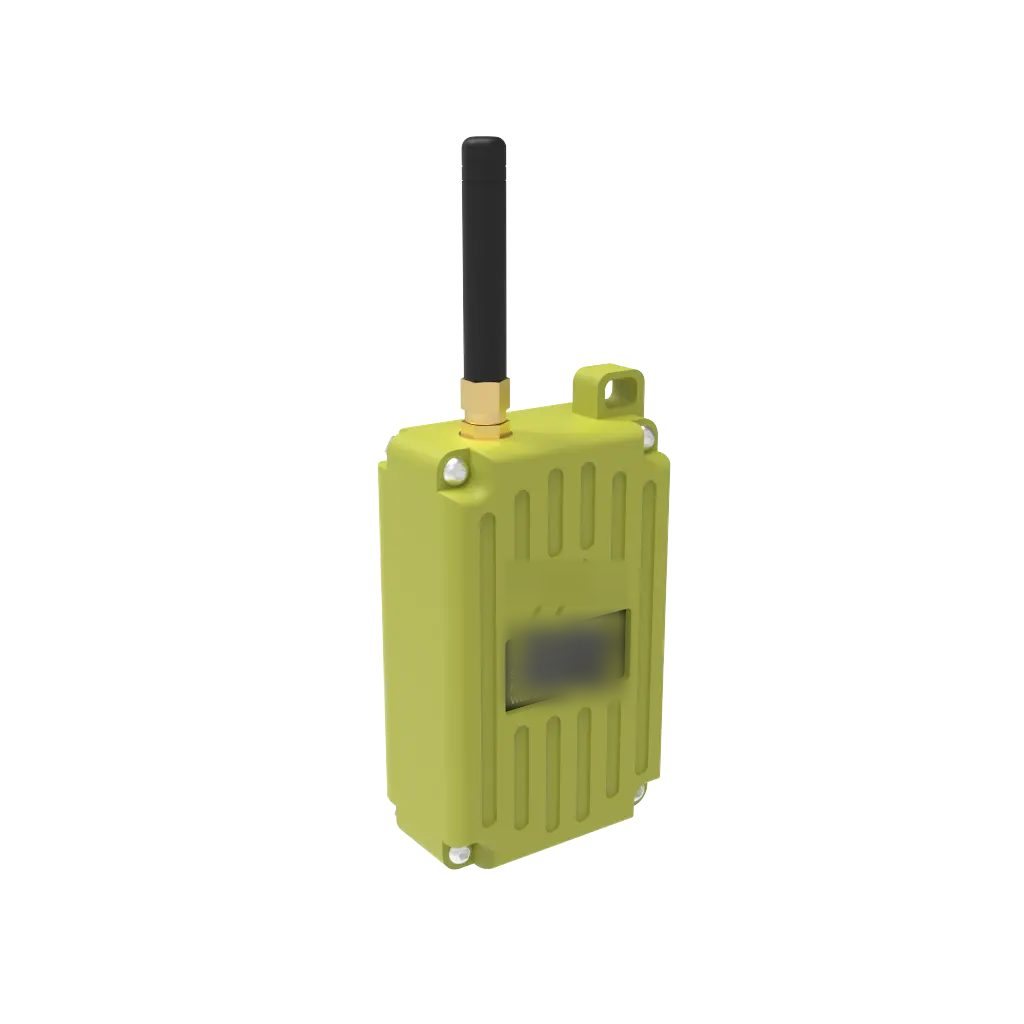
Rugged Field Node
Sealed, screw-closed enclosure with an external SMA antenna and a lug for lanyard or carabiner. The workhorse node for patrols, vehicles, relief teams and repeater duty.
- External SMA — swap to high-gain or vehicle antenna
- High-visibility or subdued finishes
- Runs as an endpoint or an unattended repeater
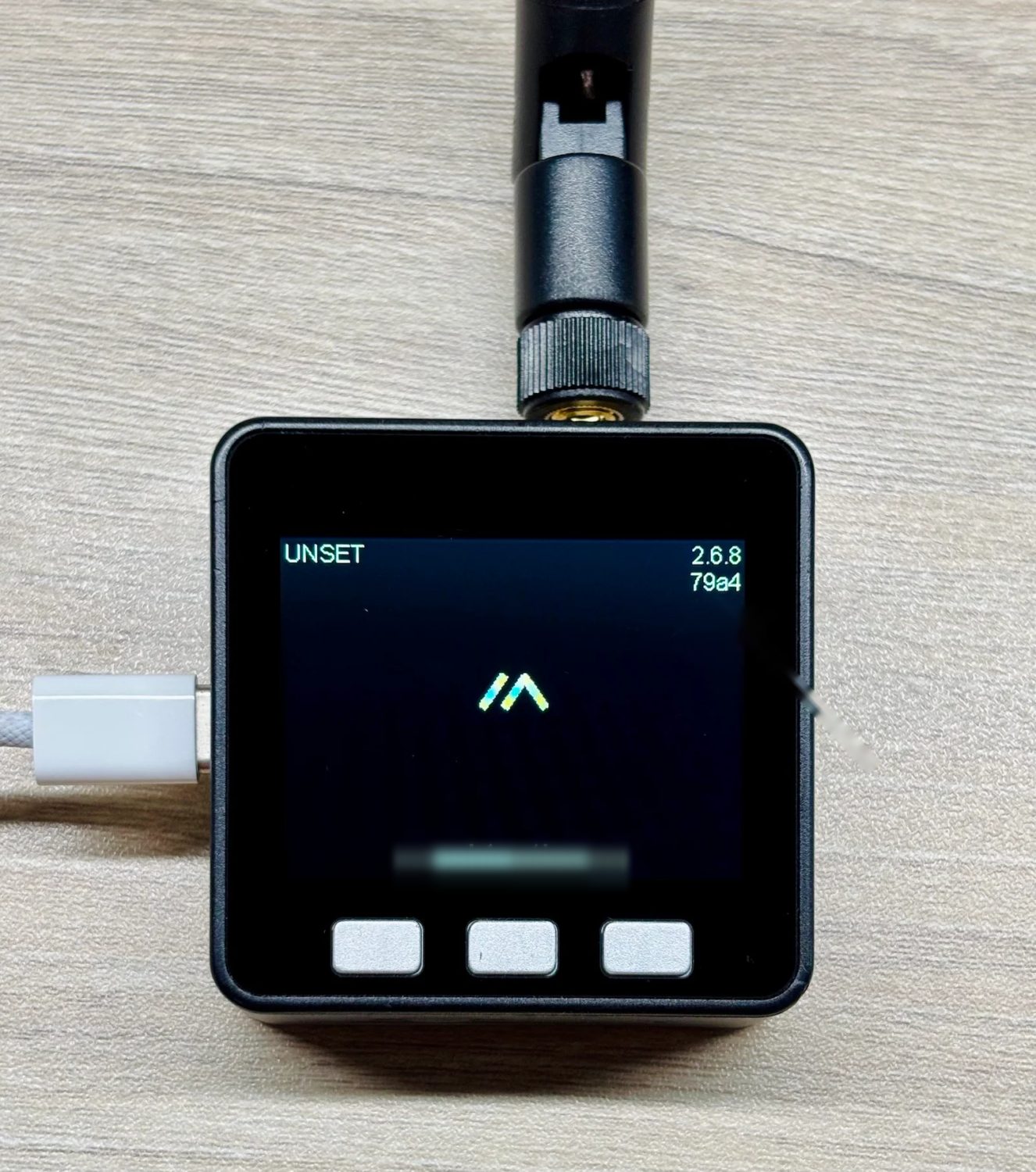
Compact Display Node
A palm-size node with its own colour screen and buttons — read messages, check node count and battery, and change channel without pulling out a phone.
- On-device message read and node list
- Region and channel set from the device or over USB
- Useful as a bench and fault-finding tool during install
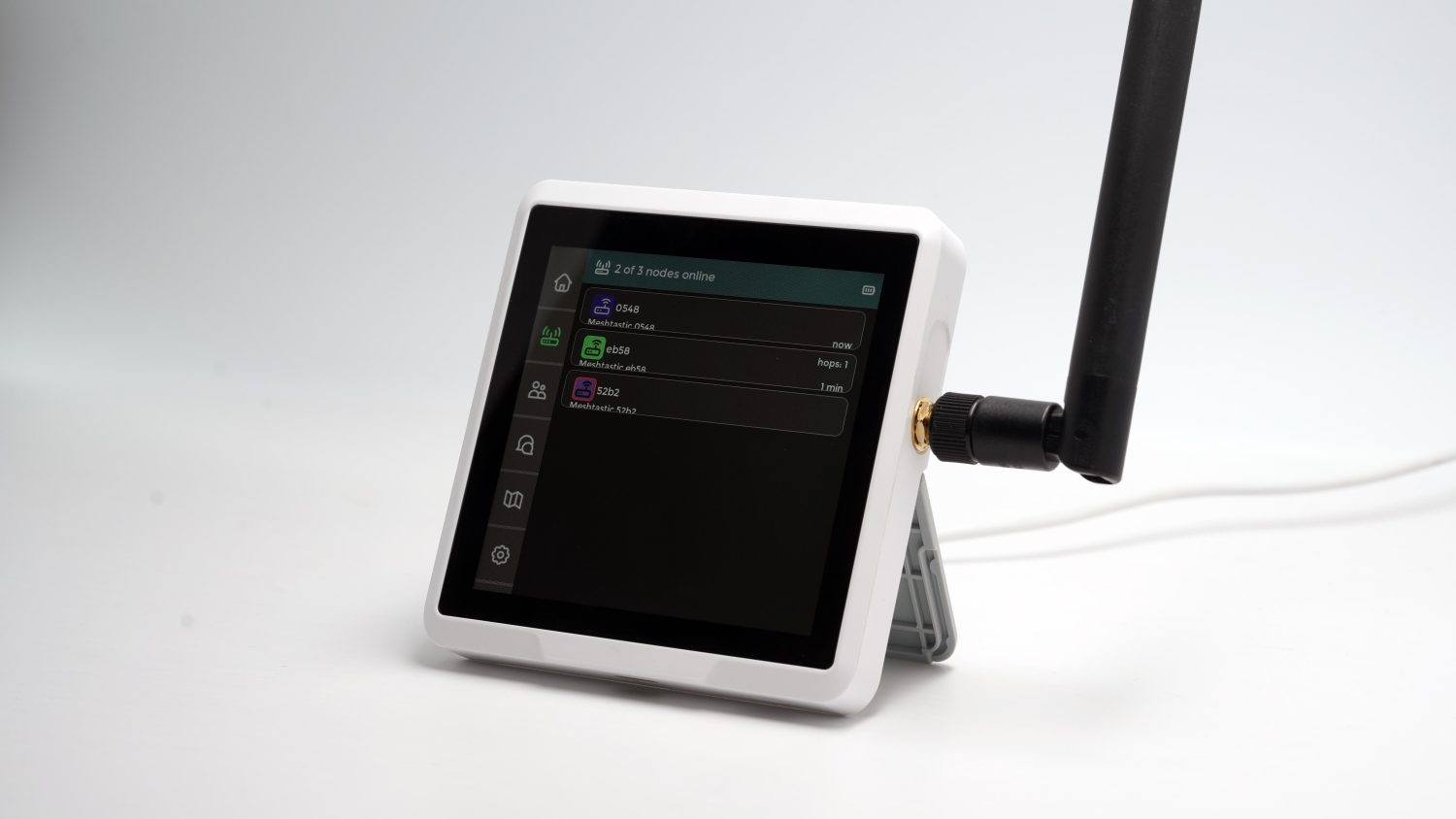
Command Display
A desk or vehicle touchscreen that shows the whole mesh at a glance — who is online, how many hops away, last heard, battery. Sits in the OP, control room or command vehicle.
- Live node list with hop count and last-heard timing
- Map, messaging and alert views
- Mains, vehicle or battery powered
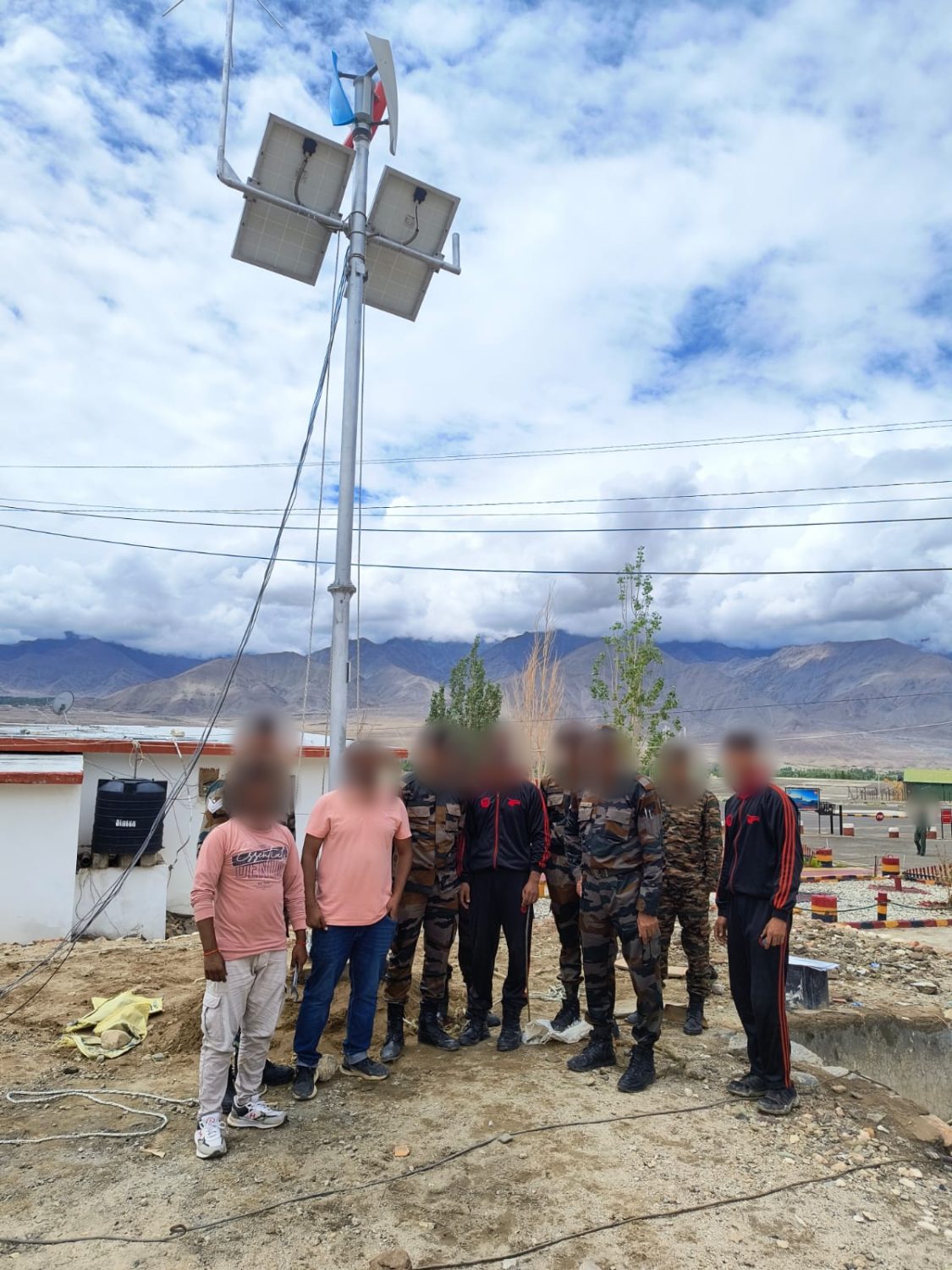
Solar-Wind Ground Station
A permanently installed, self-powered relay for hilltops and ridgelines. Solar plus wind generation, sealed cabinet, mast-mounted antenna — installed and commissioned by our team.
- Solar + vertical-axis wind for winter and monsoon generation
- Sealed cabinet with battery, charge controller and node
- Extends a valley or sector mesh with no mains and no operator
Compatible with standard GoPro mounts.
Because the tracker uses the standard two-prong GoPro interface, the mounting ecosystem is already solved — off-the-shelf, cheap, replaceable in the field, and available anywhere. No proprietary cradle to lose or wait on.
Track the airframe, not just the video feed.
A UAV's own telemetry link is a single point of failure. Lose it — jamming, terrain masking, a flyaway, a flat battery on the controller — and the aircraft is simply gone, with no independent way to find it.
A tracker on the airframe fixes that. It joins the same encrypted mesh as everything else you operate, so the drone appears on the ATAK map as another node, relayed by ground stations and other aircraft. It keeps reporting after the control link drops, and it keeps reporting on the ground after a forced landing — which is when you actually need it.
- Independent of the flight link — its own radio, its own battery, its own path home through the mesh
- Recovery after flyaway — last known position plus continued beaconing from wherever it came down
- Beyond visual line of sight — position relayed hop by hop through ground stations and other airframes
- Multi-aircraft picture — every UAV in the flight on one map alongside ground callsigns
- Low mass penalty — a compact tracker on standard mounts, no airframe redesign
- Silent — short sub-watt bursts, no continuous downlink to home in on
Fitting any transmitter to an aircraft, and UAV operation generally, is subject to DGCA rules and to your own airworthiness and frequency clearances. We supply the tracker and the mounting; the approvals remain the operator's.
Every tracker on the ATAK map.
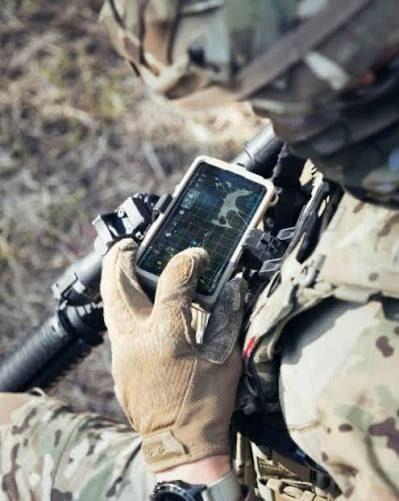
A tracker on its own is a dot. A tracker in ATAK is situational awareness. Our devices pair over Bluetooth with an Android end-user device running ATAK, iTAK or WinTAK, and push straight onto the common operating picture.
- Blue-force tracking — every node's position on one map, no uplink
- Free-text chat by callsign, section or channel
- Casualty and 9-line MEDEVAC markers
- Waypoints and points of interest shared mesh-wide
- Offline map tiles for your area of operations, pre-loaded
- Optional Cursor-on-Target bridge to higher echelons
We install and configure the plugin, map the channels to your CoT server, and load the AO tiles before the kit ships — so operators see their team move on the map from the first power-on, not after a week of setup.
Off the shelf, or built to your spec.
Most users want a working mesh this month, and our standard range does that. Some users have a frequency allocation, a hop pattern or a payload requirement that no standard product meets — and for those we design the board.
Stock devices, shipped configured
Standard Meshtastic-compatible hardware, pre-flashed with current stable firmware, region-set for India (865–867 MHz), and pre-keyed to your team's encrypted channel before it leaves us.
- Trackers, rugged nodes, display nodes and command displays from stock
- Pre-flashed, region-set and channel-keyed — powers on working
- ATAK / iTAK plugin pre-installed on supplied EUDs
- Standard GoPro mounting ecosystem, sourced locally
- Typical dispatch in days, not months
Your frequency, your hop pattern, your payload
Where the requirement is specific — an allocated band, a defined channel-hopping scheme, a sensor payload, a crypto or key-handling policy, or a form factor that has to fit an existing housing — we design and build to it.
- Frequency — build to your allocated sub-GHz band and power mask
- Hop pattern — defined channel plan, dwell and hop sequence
- Air data rate — spreading factor and bandwidth tuned for range against throughput
- Data requirements — payload size, reporting interval, sensor and telemetry integration
- Security — on-board key store, hardened keying, no field-rotatable channels
- Form factor — board-level module, or a sealed unit to your envelope
Operation outside licence-exempt bands, and any change to power or hop behaviour, is the customer's responsibility to authorise. We build to a written specification and supply the compliance data for your own approvals.